When the balance sheet stops working, the decisions get very expensive.
I advise boards, promoters and founders on restructuring, distressed-asset resolution, capital structuring and governance. Thirty-five years across finance, operations and ownership — and six of them inside the insolvency system as the promoter, not the consultant.
Tell me what is happening
A lender or creditor situation
The account has been classified, a notice has arrived, enforcement has started, or a settlement is on the table. Before the next decision becomes irreversible, there are usually more options than it appears.
Discuss a distressed situation →Capital, growth or a board decision
Growth has outrun the capital structure, a raise is being negotiated, or a decision needs judgement that is not already inside the room. Structure set now is what you live with in three years.
Discuss capital or advisory →Four situations where I am worth the call.
The bank has stopped being your friend
Classification disputes, one-time settlements, ARC negotiations, enforcement notices, CIRP and resolution strategy. I have sat on the promoter's side of that table for six years. I know what lenders can be moved on and what they cannot.
The capital structure is wrong
Sponsor funding, structured credit, term sheets, information memoranda, valuation and investor negotiation — whether the problem is too much debt, the wrong debt, or equity on terms you will regret.
A project needs to become bankable
Greenfield industrial and infrastructure development: feasibility, financial modelling, joint-venture structuring, regulatory pathway, and the document set a lender or investor will actually accept.
A board needs judgement, not another opinion
Independent director, board and family office advisory, private equity operating partner. Brought in when a decision is consequential and the room needs someone who has lived the consequences.

Sanjay Lamba · New Delhi
I qualified as a Chartered Accountant in 1989 and spent eighteen years inside businesses built by others — Radico Khaitan's finance function, a Fortune 500 joint venture I joined as its first employee, and five years at The Coca-Cola Company running four bottling territories.
Then I built my own. Sainov Spirits reached ₹700 crores and over a thousand employees before it entered insolvency in 2020. What followed — consortium banks, ARCs, one-time settlements, the CIRP, liquidation, and a court-supervised revival scheme — is the part of my education I would not have chosen and would not now trade.
I build my own models, valuations and transaction analysis through AI-assisted workflows I have constructed myself. It is not an interest; it is how the practice operates.
Every side of the table, and most of them the hard way.
What is on my desk this year.
An advisory and strategist practice, not a retirement. Client mandates are described without identifying the parties.
The revival of Sainov Spirits
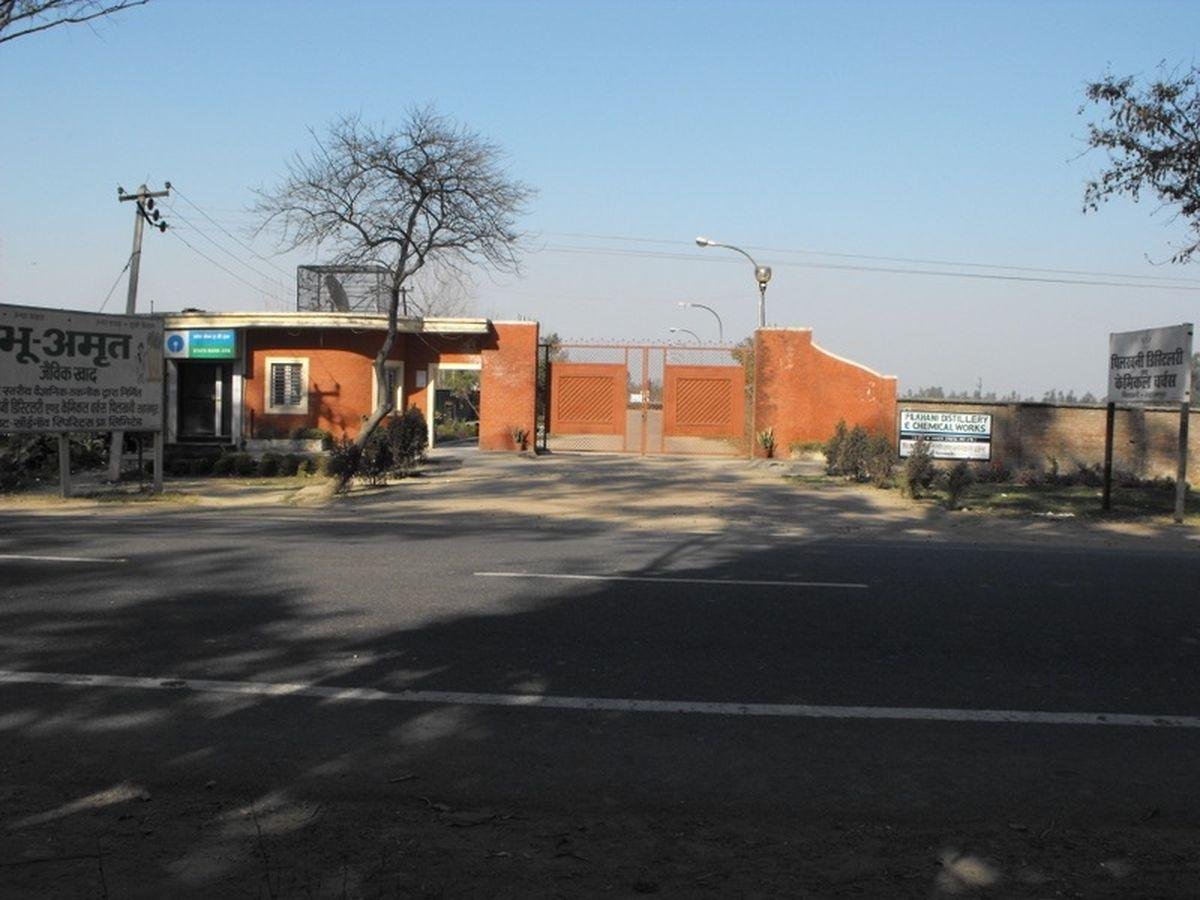
Awaiting NCLT sanctionA scheme of compromise and settlement for the Pilkhani distillery complex, approved by 100% of secured financial creditors and by 91% of all classes of creditors, now awaiting the formal approval of the Hon'ble NCLT before implementation. Investor consortium, priority debt and performance guarantees are being put in place. My own company.
An apex institution for farmer producer organisations
FounderWhat Mr. Verghese Kurien did for milk, attempted for farmers. Designing the institution from first principles — shareholding, funding architecture, governance charter and operating platform — to serve producer collectives at state and national scale. The work closest to me.
Decree enforcement against a state utility
Live mandateRecovery strategy for a power-sector supplier holding a decree confirmed at the highest court — institutional engagement, escalation architecture and settlement pathway.
Bank settlement and enforcement defence
Live mandateActing for a manufacturer against a consortium lender — classification challenge, one-time settlement structuring and enforcement response.
Balance-sheet restructuring for a growth contractor
Live mandateA civil engineering business with a strong government order book and a constrained balance sheet — working-capital redesign, credit-guarantee eligibility and a staged plan toward a public listing.
Greenfield industrial and real estate development
Live mandateGrain-ethanol and process-manufacturing assets in India, a sovereign joint venture in the Gulf, and a large-format residential development in Lucknow — project structuring, financial modelling and sponsor funding.
Policy work on insolvency execution
Own initiativeA paper on why India's insolvency framework underperforms at the execution layer rather than the design layer — written from six years inside it, and directed at the institutions that can act on it.
Building an AI-native practice
OngoingModels, valuations, credit documents and transaction analysis run through workflows I build myself, including dashboards that track the mandate portfolio daily. Not an interest — how the practice operates.
Work already delivered.
Described without identifying the parties. Including one that did not close, because that is also what the work looks like.
Unstructured holdings into an investable platform
A promoter held land across several unrelated companies, with no structure and no route to value. I consolidated the holdings, formalised the entities, and built a platform through which the investments could be structured, financed and realised.
An international development partner, brought to the table
Introduced and brought in a Japanese developer for a 125-acre integrated township, taking the project into development, sales and marketing.
₹50 crores raised
Structured and executed a fundraise for a promoter-led business — instrument, counterparty, terms and closing.
Investor-ready, and the deal the promoter walked away from
Built the valuation model, the investor materials and the negotiating position for a spirits business. Three investors came forward and reached term sheet. The promoter chose not to sign — which was his right, and the reason I now agree the terms of an engagement before the work rather than after it.
The Professional
1990 – 2007Eighteen years inside systems built by others. Radico Khaitan's finance function and two public issues. Founding employee and CFO of a Fortune 500 joint venture. Five years at Coca-Cola with P&L accountability for four bottling territories. Then President of International Business, and a seat on the Diageo–Radico board.
The Entrepreneur
2008 – 2020I stopped executing other people's businesses and built my own. Sainov Spirits — an integrated distillery and bottling complex, ₹700 crores in revenue, over a thousand employees, ₹750 crores a year in excise revenue to the state. Valued at ₹425 crores by Campari International across the negotiating table.
The Counsel
2020 – PresentSix years inside the insolvency system — as the promoter, not the advisor. Bank consortiums, ARC structures, one-time settlements, the CIRP, liquidation, and now the way back out, through a court-supervised scheme. I now advise boards, promoters and founders facing the same machinery.
All my life I had created value for others. Why should I not create value for myself?
Age forty-two. Tipped to run the company. I left.
The Builder
First employee of the American Brands–Radico Khaitan joint venture — a multinational built from a blank sheet of paper: entity, FIPB approval, systems, governance, teams. Earmarked for chief executive at thirty-two.
The Operator
Commercial and manufacturing command of four franchise bottling territories generating over ₹1,000 crores annually — P&L discipline forged inside the Coca-Cola system.
The Globaliser
Export revenue from ₹4 crores to ₹100 crores — twenty-five times, in eighteen months. The group's first overseas manufacturing venture, in Cameroon, and then another in the United Kingdom; market leadership across Angola, Ghana and Nigeria; a seat on the board of the Diageo–Radico joint venture.
The Founder
I had the contacts, the passion and the knowledge. What I lacked was capital. When a monopolistic state market was thrown open, I could move slowly and lose the opportunity, or play on the front foot. I chose the front foot. Turnover went from ₹65 crores to ₹685 crores in a single year; headcount from a hundred to a thousand; excise contribution from ₹100 crores to ₹750 crores.
The Comeback
The account had already turned NPA. I entered a one-time settlement and paid twenty per cent within the stipulated four months. I went back and asked for six more. The banks cancelled the settlement, adjusted what I had paid, and took me to the NCLT. Through the CIRP, through liquidation in 2023, I did not let go. I brought a scheme of compromise and settlement and carried it with the approval of 100% of secured financial creditors, and 91% of all classes of creditors — operational creditors, workmen, employees and government dues among them. It now awaits the formal approval of the Hon'ble NCLT, and then implementation.
A portfolio built from nothing, and judged abroad.
Whisky, vodka, brandy and rum — created, formulated, named, packaged and put through one of the hardest distribution systems in the world. Between 2011 and 2014 these brands were entered at the Monde Selection in Brussels and came back with medals.

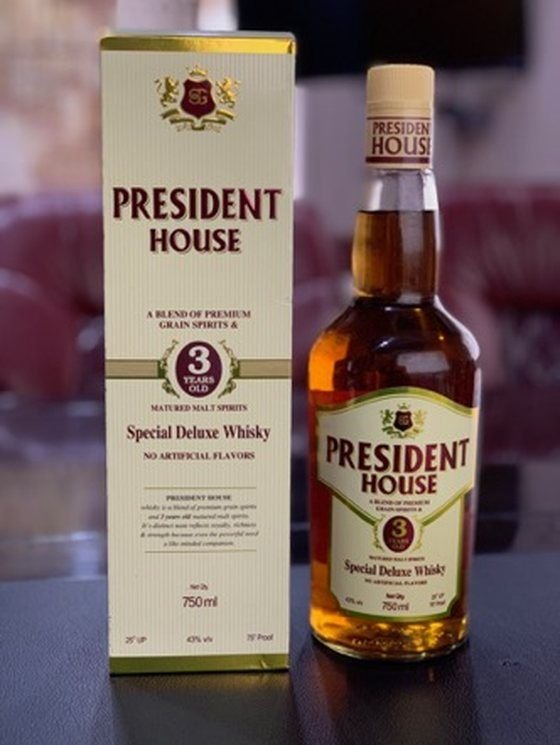
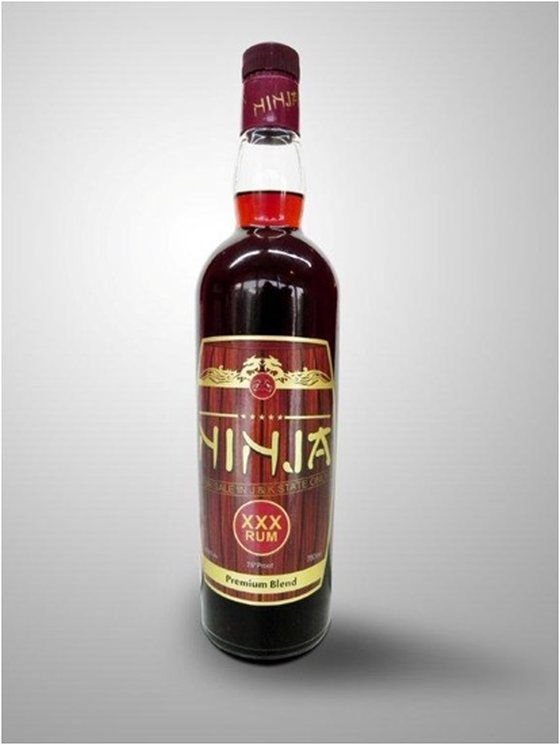
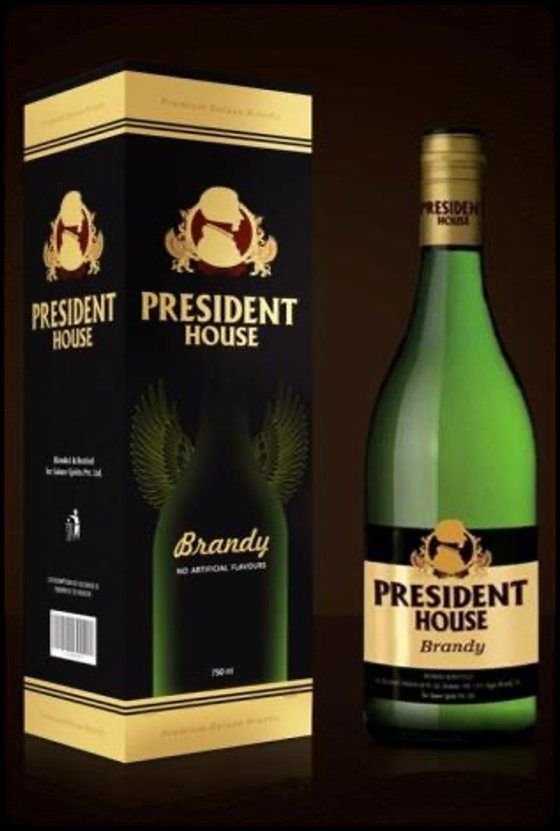

Maya took Gold at the Monde Selection for three consecutive years across all four variants, and then the Highest International Quality Trophy that those three golds earn. It remains the brand I am proudest of building.
Ten things I would not have learned any other way.
I have made money and I have lost it. The losing taught me more. This is the part most people in my position leave off their website — which is precisely why it is the useful part.
Winners share it all
I built Sainov to create value for every stakeholder, not only for me. I still believe it, and I think it is part of why every one of my secured financial creditors eventually signed. Reputation compounds slowly, and it is the only asset that survives an insolvency.
Never carry monkeys on your shoulders
A co-founder who comes in free of cost thinks differently, because nothing of his is at stake. Skin in the game is not a clause in the shareholders agreement — it decides how a man behaves at two in the morning when the business is in trouble. Find people who have something to lose, and a real appetite for risk.
Test exposure before competence
The first thing I now establish about any counterparty is not how good they are. It is what they stand to lose if this goes wrong. I learned that the expensive way: I used to extend trust at the speed of instinct, and mistook it for generosity when it was closer to impatience.
Fix the capital structure before you need to
I built on debt, because debt was available and equity meant giving something up. I should have brought in a like-minded co-founder or investor at the beginning. By the time you need equity, you cannot get it on terms you would accept. Capital structure is not a finance question — it decides how much room you have when something goes wrong.
Do not let a good business fund a bad one
I acquired a distillery on a slump-sale basis, and that changed everything that followed. When a monopolistic state excise policy squeezed that asset, my healthy businesses carried it. Cross-subsidy inside a group is invisible until it is fatal. Ring-fence, or be honest with yourself about what you are actually funding.
Working harder than your team makes your team relax
I was chief executive, chief financial officer and chief operating officer at once. I had good people, but when the founder does everything, everyone else steps back. The job is not to carry the business — it is to build the system that carries it, and then hold people to it.
Somebody has to own the outside
In a regulated business, policy is not background. It is a counterparty. You need one person whose entire job is the external environment, so that you can hold the core. I did not have that, and the external environment is what made the business suffer.
Systems are not overhead
Ten years ago I did not have the systems, the controls, or the tools that exist now. I would run that business very differently today — more organised, more instrumented, far less dependent on what was in my head. Founders who plan to install this later are borrowing against their own future judgement.
Conviction is a strategy, not a feeling
From February 2020, through the CIRP, through liquidation, through every adverse order, I did not lose hope. That was not optimism. It was a reading: as long as the strategy is right and the belief is real, there is a move available. There almost always is. Most people stop looking one move early.
Speed is not the problem. Unfunded speed is.
Founders are told to slow down. I would not say that — I moved as fast as anyone. When a monopolistic market opened, I went from ₹65 crores to ₹685 crores in a single year, and taking that opportunity was the right decision.
What I did not have underneath it was capital that could carry the pace. Growth funded by debt looks identical to growth funded by equity, right up to the quarter it does not. Businesses rarely die of ambition. They die because demand was misjudged, or because the cash ran out one month before the money arrived.
So do not go slower. Go with the structure that survives being wrong. Build a team that lives the same vision, stay open to advice and to criticism, and keep the courage to change the model when the evidence says you should.
I have made the decisions you are about to make.
I work with a small number of founders each year — consumer and industrial businesses past the idea stage, facing the decisions that actually determine whether a company survives its own growth. Distribution economics. Working capital. The first serious lender. The co-founder question. The capital structure nobody wants to think about yet. Not a mentorship programme. A working relationship, on terms.
What that looks like →Not every founder. A particular kind.
This is for you if
- You have a real business with real revenue, past the idea stage
- You make or move a physical product — consumer, industrial, agricultural
- Growth is outrunning your working capital
- You are about to take on serious debt, or already have
- Distribution is where your economics live or die
- You operate in a regulated sector and policy is a counterparty
- You are deciding about a co-founder, an investor, or a dilution
This is not for you if
- You are pre-revenue and looking for validation
- You want introductions rather than judgement
- You are looking for free advice over coffee
- You want someone to agree with a decision already made
- Your business has no physical operations and no lender
Five things, from having done them.
Distribution and market economics
Twenty-five times export growth in eighteen months. Four Coca-Cola bottling territories. Forty country markets developed. A national spirits distribution network built from nothing against entrenched incumbents. If your unit economics break at scale, they usually break in distribution, and that is a solvable problem if you catch it early.
Capital structure, before it becomes a crisis
The single most expensive mistake I made was building on debt when I should have brought in equity. I will tell you what your structure will do to you in three years — how much room it leaves, what happens to it in a bad quarter, and what a lender will actually do when you miss a covenant.
Raising the money, and from whom
Bank consortiums, private equity, structured credit, sponsor funding, ARCs, family offices. Term sheets, information memoranda, valuations, negotiation. I have sat on both sides of that table, and the question is rarely how much — it is from whom, on what terms, and what it costs you when things go wrong.
The systems you do not think you need yet
Controls, reporting, governance, and the discipline that lets a business run without living inside the founder's head. I ran mine as chief executive, finance head and operator at once, and I would not do it that way again. Today I build AI-assisted workflows that do the work a finance team used to — and I will show you how to do the same.
The room, when it goes wrong
If a lender turns, if a classification changes, if enforcement starts — I have been in that room as the promoter, not the consultant. I know what is negotiable, what is theatre, and how much time you actually have. Most founders discover this at the worst possible moment.
Deliberately small, and on terms.
Free advice gets ignored. What is paid for gets acted on. I keep this small so that the founders I do take on get real attention.
A small number at a time
Two or three founders concurrently. I would rather do a few well than many badly, and my own mandates take the rest of the week.
A first conversation, at no cost — except a coffee
An hour. You describe the business and the decision in front of you; I tell you honestly whether I am the right person. Often I am not, and I will say so.
Then a defined engagement
A monthly retainer for the time, a fixed fee against the scope of work, and equity — so that I am carrying the same risk you are. All three, agreed in writing before anything starts.
I do not take a board seat by default
If it is useful I will, on proper terms. But an advisor who becomes a director changes what he can say to you, and that is not always in your interest.
If that describes you, use the form below and choose Founder advisory. Four or five lines is enough to start.
Advising promoter groups, boards and institutional investors on restructuring, IBC/NCLT strategy and distressed-asset resolution; bank consortium, ARC and one-time-settlement negotiation; capital structuring, sponsor funding, structured credit, term sheets and information memoranda; greenfield industrial project development and joint-venture structuring.
Built a leading regional alcoholic beverages company from a standing start to ₹700 crores in annual revenue and over 1,000 employees, operating an integrated distillery and bottling complex. Built the full stack — manufacturing, distribution, brand portfolio, state excise relationships and institutional finance.
Directed international operations, export strategy and the spirits division within a ₹2,000+ crore, thirty-factory enterprise. Executed first-of-their-kind global alliances including a UK bottling tie-up, a beer launched with a German brewery and a Scotch whisky bottled in Scotland.
P&L-accountable leadership of four franchise bottling territories generating over ₹1,000 crores annually. Led 100+ professionals across commercial, manufacturing and supply chain.
First employee of a Fortune 500 joint venture, built from incorporation: FIPB approval, governance frameworks, systems and teams. De facto business head across finance, commercial, procurement, logistics and planning.
Built the finance backbone of a fast-scaling spirits company: treasury, taxation, budgeting, statutory compliance and strategic financial planning. Executed two public issues end to end.
"His professionalism has inspired me to the core — fair dealings with one and all, resulting in a win-win for both parties."
Dr. Nawal Kishor Joshi
"Entrepreneur mindset with good people management ability, and a tireless worker in one."
Rajesh Kumar Mehta
"Sanjay combines the intellectual bandwidth with a hunger for results and execution."
Vineet Kumar Kapila
Chartered Accountant, The Institute of Chartered Accountants of India, 1989 · B.Com (Honours), Shri Ram College of Commerce, University of Delhi, 1985 · Languages: English, Hindi, Punjabi
Tell me the situation. I will tell you honestly whether I can help.
A first conversation costs nothing. If I am not the right person, I will say so and point you to someone who is.